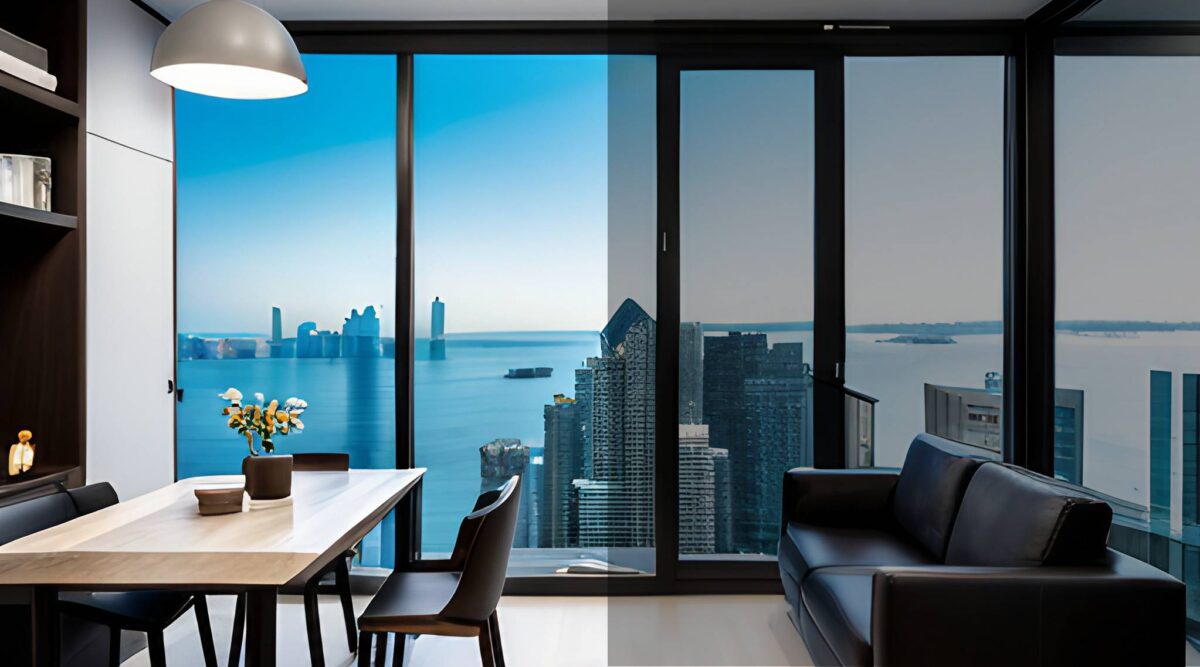
Window films are one of the most searched upgrades in Toronto for people who want to protect what’s inside their home or business. When someone searches for window films, they are often trying to fix a clear problem. Floors look faded near the window. Furniture has two colours. Displays near the glass wear out faster than everything else.
This happens across Toronto and the GTA. Downtown condos with tall glass. Homes in Vaughan and Markham with big windows. Offices in Mississauga. Shops in Scarborough. Same issue in every area.
Window films help block UV rays that slowly damage flooring, furniture, and interior finishes. This damage does not happen overnight. It builds day by day. You don’t notice it at first. Then one day it’s very clear, and the colour is already gone.
Many people think heat causes fading. Heat can play a small role, but UV rays do most of the damage. UV passes through regular glass, even modern double-pane windows.
That’s why window films are used in homes, retail spaces, offices, and rental units across the GTA. They protect what’s already inside the space without blocking daylight or changing how the room feels.
If you want a broad overview of how window films are used in real buildings, this page on window films explains the basics clearly.
How Window Films Protect Interiors From UV Damage
Window films are thin layers installed on the inside of glass. Some films are clear. Some have a light tint. Their main job is to reduce ultraviolet radiation before it reaches the room.
UV rays slowly break down materials. Wood lightens and dries. Fabric loses colour. Leather cracks. Vinyl fades. This happens even if the room feels cool and comfortable.
Most standard windows block only part of UV. Many still let more than half pass through. Over years, that exposure adds up.
Window films can block up to 99 percent of UV rays. After installation, visible light still enters the room, but the damaging energy is filtered out.
This helps protect:
- Hardwood floors
- Engineered wood
- Vinyl and laminate flooring
- Area rugs
- Leather furniture
- Fabric seating
- Office desks
- Retail displays
- Wall art and finishes
A common call we hear comes from condo owners near Lake Shore or King West. Large glass panels. South or west exposure. One side of the room looks faded. The other side looks fine. People think it’s age or cleaning. It’s UV exposure.
Window films slow this damage right away. They do not restore colour, but they stop further fading.
For a deeper look at how this works, this guide on UV-blocking window films explains UV behaviour in simple language.
Why UV Damage Is a Bigger Problem in Toronto
Toronto doesn’t feel sunny all year, but UV rays don’t depend on heat. UV passes through clouds. It reflects off buildings. It bounces off snow in winter.
Glass towers downtown can increase UV exposure instead of reducing it. Reflection between buildings matters more than most people expect.
Higher UV risk in the GTA often shows up in:
- Condos with floor-to-ceiling glass
- Homes with bay windows or sunrooms
- Retail shops with street-facing windows
- Offices with glass walls or corner units
- Restaurants with seating near front windows
Winter causes issues too. Snow reflection boosts UV even when the sun feels weak. That’s why some homes see faster fading after winter ends.
A new local example comes from a medical clinic in Vaughan. The waiting room faced west. Vinyl flooring near the windows faded faster than the rest of the room. Window films were installed in early spring. Two years later, the colour still matches across the floor.
Another case is a marketing office near Liberty Village. Fabric chairs near the windows faded within a year. After window films were installed, the same chairs stayed even in colour.
Window films work all year. They are not just for summer.
Window Films Compared to Curtains, Blinds, and New Windows
People often try other fixes first. That makes sense. But most don’t solve the real issue.
Curtains and blinds only help when closed. Floors still fade when they’re open. Most people open them during the day.
Low-E glass helps a bit, but it still allows UV through. Replacing windows costs much more than installing window films. Many condos and rentals don’t allow window replacement.
Window films work all day without effort. You don’t need to remember to close anything. UV is reduced whether the sun feels strong or not.
That’s why many property managers choose film instead of replacement. This article on window films vs window replacements explains the cost and protection differences in plain terms.
Installation Quality Makes a Real Difference
Window films are installed on the interior surface of glass. The process looks simple online, but poor installs fail fast.
A proper install starts with deep cleaning. Dust causes bubbles and haze. Film must be cut clean and sized correctly. Small gaps show over time.
Poor installs often lead to:
- Peeling corners
- Visible lines
- Hazy spots in sunlight
- Shorter film life
Professionally installed window films often last 10 to 15 years. Poor installs may fail in two or three.
We once checked a condo unit in Etobicoke where film was installed by a general contractor. It bubbled within a year. The owner thought window films were low quality. The issue was the install, not the film.
Toronto buildings use many types of glass. Experience matters. What works in one building may not work in another.
If you want to know what a good install looks like, this article on professional window film installation explains common mistakes and how to avoid them.
New Real Examples of Window Films in Use
A new case comes from a semi-detached home in East York. South-facing living room. Original hardwood floors. After years of sun, fading near the window was clear. Window films were installed before refinishing. Four years later, the colour remains even.
Another example is a small bakery in downtown Toronto. Display shelves near the window faded packaging and labels fast. After window films were installed, product appearance stayed consistent and waste dropped.
A third case is a condo rental near Square One. The owner added clear window films before listing the unit. After several tenants, the floors still match wall to wall. That helps resale value later.
These results are common when window films are installed early.
Seasonal Problems Window Films Help Reduce
Toronto has strong seasonal changes. Window films help with more than just UV.
Spring and summer bring long daylight hours and strong sun angles. That’s when fading speeds up.
Fall brings glare as the sun sits lower. Winter adds reflection from snow and ice.
Window films help reduce:
- Year-round UV exposure
- Seasonal glare
- Sun stress during summer
- Reflection during winter
This is why installs happen year-round in the GTA.
Common Myths About Window Films
Many people think window films make rooms dark. That depends on the film. UV protection films can be clear.
Some think window films damage glass. Proper films installed correctly are safe for most residential and commercial windows.
Others think fading stops once blinds are used. UV still reaches floors and furniture when blinds are open.
Window films work quietly. You don’t notice them much, but the damage slows.
Cost Compared to Long-Term Savings
Replacing floors costs thousands. Replacing furniture costs more. Replacing windows costs far more.
Window films cost less and protect what’s already there. That’s why many landlords, shop owners, and homeowners install them early.
One Toronto landlord said the cost of window films was less than one floor repair. That math is simple.
When Window Films Should Be Installed
The best time is before fading shows. The next best time is now.
Once fading happens, it cannot be reversed. Window films stop further damage.
If you’re moving into a new condo, renovating, or opening a shop, window films should be installed early. Waiting costs more later.
Trusted External Sources on UV and Interior Damage
Health Canada explains how UV radiation passes through glass and causes long-term damage to materials and people, even when it’s not hot:
https://www.canada.ca/en/health-canada/services/health-risks-safety/radiation/types-sources/ultraviolet.html
The Canadian Conservation Institute explains how light exposure damages indoor materials like wood, fabric, and finishes over time:
https://www.canada.ca/en/conservation-institute/services/agents-deterioration/light.html
Final Thoughts
Window films protect floors, furniture, and displays every day without changing how a space looks or feels. They work in condos, homes, offices, and retail spaces across Toronto and the GTA.
Installed early, window films help avoid costly replacements later. That’s why many local property owners treat them as quiet protection instead of a last-minute fix.